
Knee
Jumper's Knee: Symptoms, Causes, and Treatment
- Jumper's knee
- Patellar tendinitis
- Knee pain
- Sports injuries
Written by: Dr. Osama Samir Al-Droubi · Specialist in orthopedic surgery, fractures, sports medicine and joint reconstruction
Published by: Dr. Osama Samir Al-Droubi's clinic · Salmiya, Kuwait
Last updated:
Learn about jumper's knee and patellar tendon pain, including symptoms, risk factors, diagnosis, treatment, and safer exercise habits.
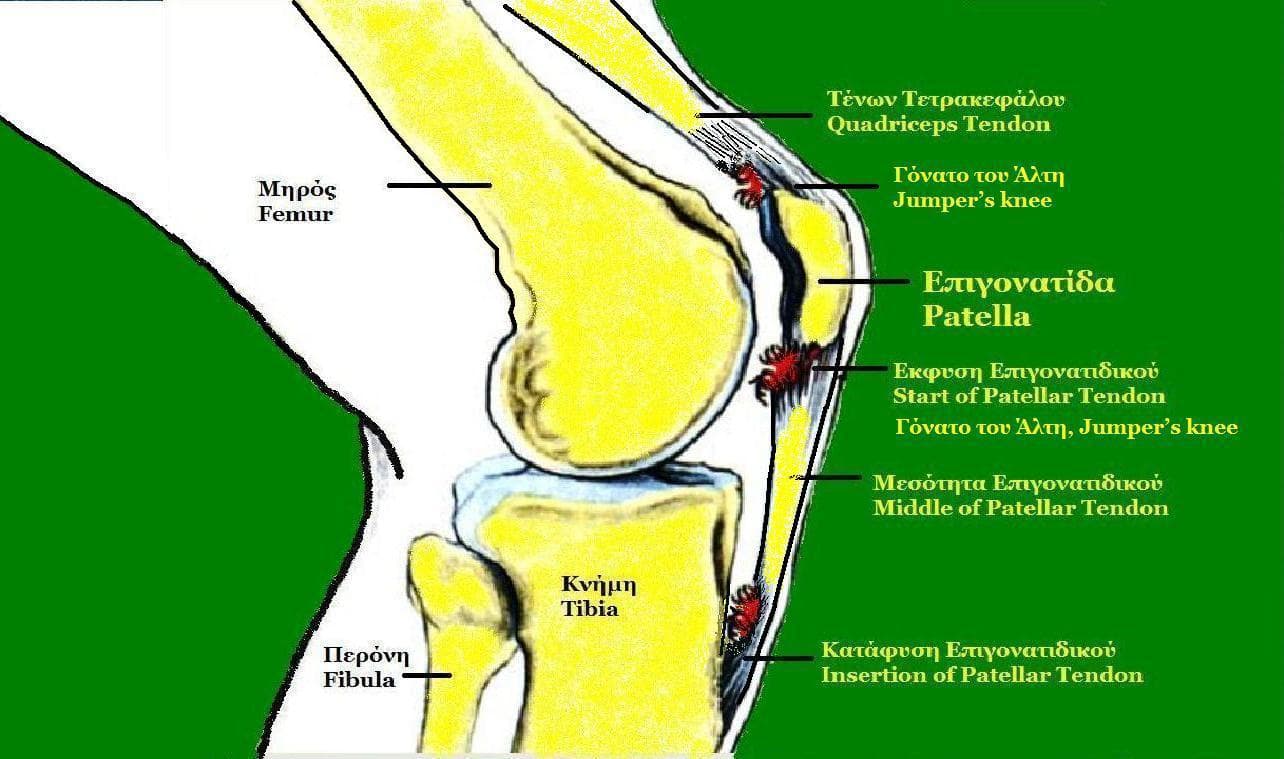
Illustration of patellar tendinitis in jumper’s knee
Image credit: Dr. Harry Gouvas · Public domain

What is jumper's knee?
Jumper's knee, also called patellar tendinitis, is common among athletes and people who frequently jump, run, or perform repeated movements that place stress on the knee. It causes pain below the kneecap and may affect normal walking, climbing stairs, or playing sport.
What are the symptoms of jumper's knee?
Common symptoms include pain below the kneecap, increased pain when jumping or running, pain when climbing stairs or standing up after sitting, stiffness or discomfort at the front of the knee, and reduced sports performance if the condition persists.
What causes patellar tendinitis?
Common contributing factors include repeated jumping, running and demanding sports, increasing the load on the knee too quickly, weak thigh or leg muscles, reduced flexibility, and inadequate warming up before exercise.
Who is more likely to develop jumper's knee?
Jumper's knee is common among basketball and volleyball players, runners, athletes who jump frequently, people returning to sport after a break, and those with muscle weakness or problems with their movement pattern.
How is it diagnosed?
Diagnosis involves a clinical examination to identify the site of pain and the activities that trigger symptoms. The doctor may request imaging, such as X-rays or an MRI scan, when another knee injury is suspected.
How is jumper's knee treated?
Treatment depends on severity. It commonly includes reducing activities that worsen pain, ice packs, anti-inflammatory medication when needed, physiotherapy, stretching and thigh-strengthening exercises, and adjustments to sports training and technique.
How can jumper's knee be prevented?
Warm up before sport, increase exercise intensity gradually, strengthen the thigh and leg muscles, improve jumping and landing technique, and stop when pain appears rather than ignoring it.
When should you see a doctor?
See a doctor if pain lasts for several days, gets worse over time, or starts to affect walking, daily activities, or sport. Neglecting the injury may allow a mild problem to become chronic.
Summary
Jumper's knee is a common knee injury, particularly among athletes. Early diagnosis and appropriate treatment help reduce pain and support a safe return to activity.
Medical references
Related articles
Related treatment services
Medical note
Need a medical assessment?
This content is educational and does not replace a medical examination. If pain continues or affects movement, book an appointment to identify the cause and suitable treatment plan.