
Knee
ACL and Knee Meniscus Injuries: Symptoms and Treatment
- ACL injury
- Meniscus tear
- Knee injuries
- Sports injuries
Written by: Dr. Osama Samir Al-Droubi · Specialist in orthopedic surgery, fractures, sports medicine and joint reconstruction
Published by: Dr. Osama Samir Al-Droubi's clinic · Salmiya, Kuwait
Last updated:
A guide to ACL tears and knee meniscus injuries, including symptoms, causes, diagnosis, conservative treatment, surgery, and injury prevention.
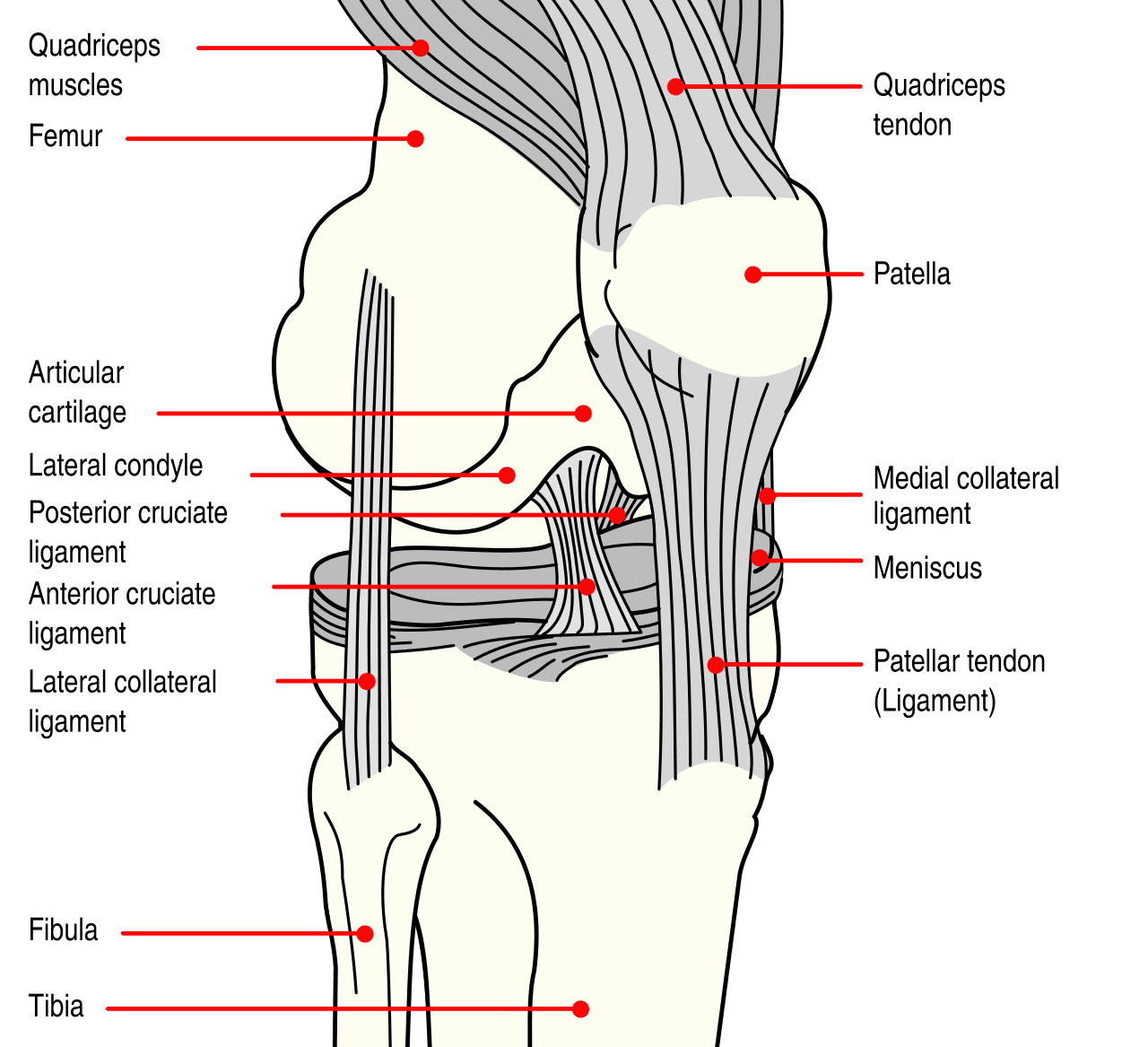
Anatomical diagram of the knee joint, ligaments and cartilage
Image credit: Mysid · Public domain · Rendered as PNG

What is an anterior cruciate ligament tear?
Knee injuries are common, especially among athletes and people exposed to sudden movements or forceful twisting during physical activity. Two common injuries are an anterior cruciate ligament (ACL) tear and a knee meniscus tear. Each can cause noticeable pain, joint instability, and difficulty moving.
What are the knee menisci?
The ACL is one of the main ligaments inside the knee. It helps stabilize the joint and prevent excessive movement of the shinbone relative to the thighbone. The knee menisci are tissues that help distribute pressure within the joint and reduce friction between the bones. They may tear because of a sports injury, a sudden movement, or age-related strain and wear.
What are the symptoms of ACL and meniscus injuries?
Symptoms may include sudden knee pain, swelling after an injury, difficulty walking or putting weight on the leg, a feeling that the knee is unstable, limited movement, and clicking or locking with some meniscus injuries.
What causes these injuries?
Common causes include a sudden twist of the knee, stopping quickly or changing direction during sport, jumping and landing incorrectly, a direct knee injury, and repeated strain or age-related wear.
How are these injuries diagnosed?
Diagnosis is based on the medical history and a clinical examination. The doctor may request X-rays to rule out fractures and an MRI scan to assess the ligaments and menisci. Clinical tests also help assess stability and the extent of the injury.
What treatment options are available?
Treatment depends on the type and severity of the injury, the patient's age, and their activity level. It may include rest, ice packs, pain-relieving or anti-inflammatory medication, physiotherapy to strengthen muscles and improve stability, a knee brace, and surgery if the injury is severe or affects joint stability.
When may surgery be necessary?
Surgery may be necessary for a complete ACL tear with clear instability, a meniscus tear that causes knee locking or persistent pain, failure of conservative treatment to improve the condition, or a planned return to sport that requires a highly stable knee.
How can knee injuries be prevented?
To help prevent ACL and meniscus injuries, warm up before exercise, strengthen the thigh and leg muscles, learn correct movement and landing techniques, and avoid poorly controlled sudden movements.
Summary
ACL tears and knee meniscus injuries require careful diagnosis and an appropriate treatment plan. Early care can help reduce pain, improve movement, and restore knee stability.
Medical references
Related articles
Related treatment services
Medical note
Need a medical assessment?
This content is educational and does not replace a medical examination. If pain continues or affects movement, book an appointment to identify the cause and suitable treatment plan.