
Back
Sciatica: Causes, Symptoms and Best Treatments
- Sciatica
- Sciatic nerve pain
- Leg pain
- Lower back pain
- Herniated disc
- Slipped disc
- Pinched nerve
- Sciatica treatment
- Physiotherapy
- Orthopedic surgeon Kuwait
Published by: Dr. Osama Samir Al-Droubi's clinic · Salmiya, Kuwait
Last updated:
A simple guide to sciatica: what it feels like, what causes it, the warning signs that need urgent care, how long it lasts, and the best treatments from exercise and medicines to injections and surgery.
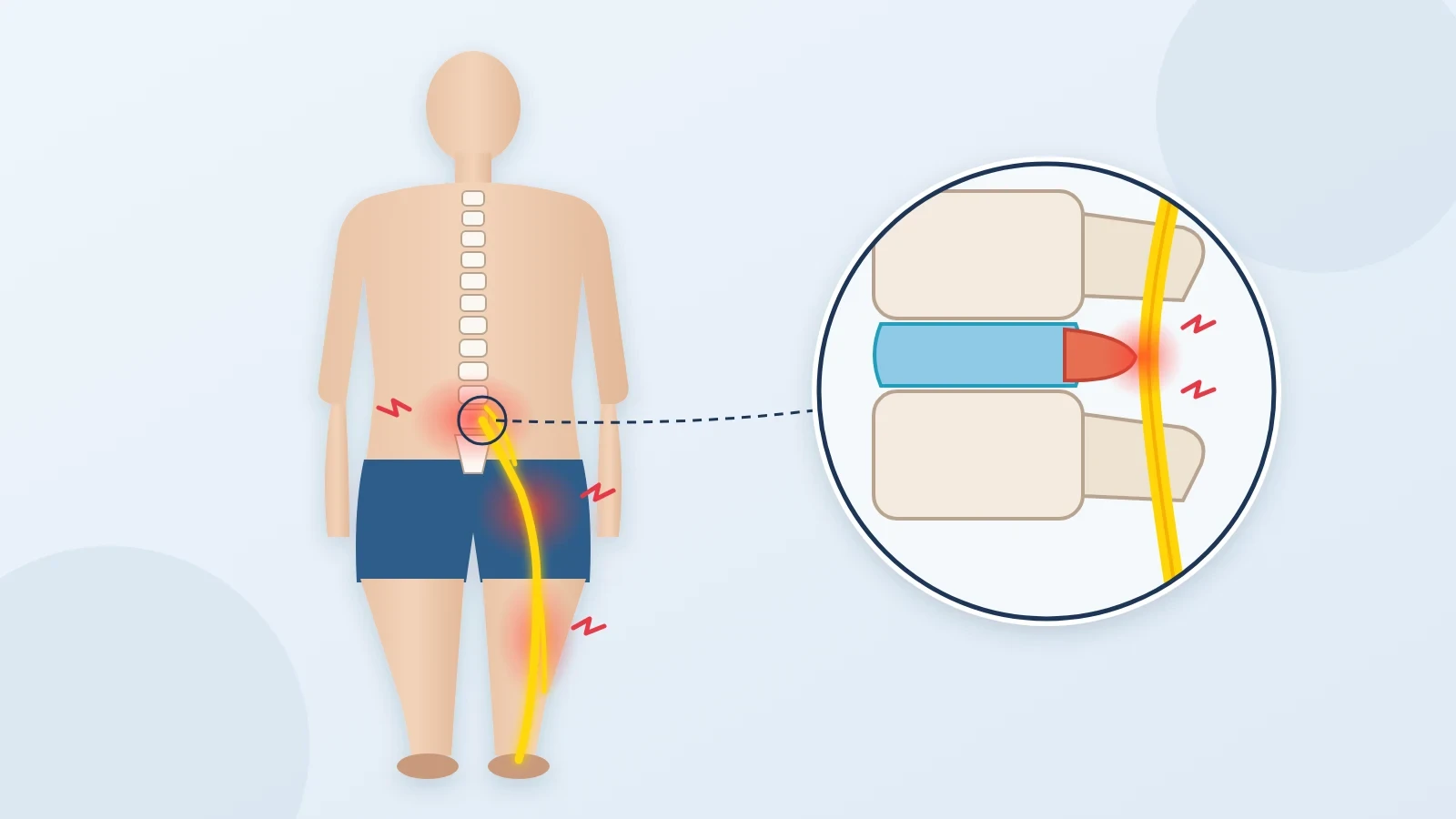
Illustration of sciatica: a herniated lumbar disc pressing on a nerve root, with pain spreading from the lower back down the leg along the sciatic nerve
Quick answer: Sciatica is pain that travels from your lower back or buttock down one leg, sometimes to the foot. It happens when a nerve root in the lower spine is pressed or irritated, most often by a herniated disc. The good news: most people feel much better within 4–6 weeks without surgery.
What is sciatica?
The sciatic nerve is the longest and thickest nerve in your body. It starts from several nerve roots in your lower back, runs through the buttock and down the back of the thigh, and reaches the leg and foot. When one of these roots is squeezed or inflamed, pain shoots along the nerve's path. That pain is what we call sciatica.
Sciatica is not a disease on its own. It is a sign of a problem in or around the spine. It is common: a review of 23 studies found rates ranging from about 1% to 43%, depending on how each study defined sciatica. It is most common in middle age.
What does sciatica feel like?
Pain that runs from the lower back or buttock down the back of the leg, usually on one side.
Leg pain that is often worse than the back pain.
A burning, electric or shooting feeling down the leg.
Numbness or tingling ("pins and needles") in the leg, foot or toes.
Weakness in the leg or foot in some cases.
Pain that gets worse when you sit for long, cough, sneeze or bend forward.
What causes sciatica?
Herniated (slipped) disc: by far the most common cause, behind about 90% of cases.
Spinal stenosis: narrowing of the spinal canal, more common after 60. Leg pain gets worse with walking and eases when you sit.
Spondylolisthesis: one vertebra slips forward over another, mostly at the L4, L5 and S1 levels, and pinches the nerve.
Spinal arthritis and bone spurs: these narrow the openings where nerves leave the spine.
Piriformis syndrome: a tight muscle deep in the buttock presses on the sciatic nerve.
Less common causes: severe injury to the surrounding muscles, strong inflammation of the sacroiliac joint, infections or tumors.
What raises your risk?
Extra body weight, long hours of sitting, heavy lifting or frequent bending at work, smoking, an inactive lifestyle and weak core muscles.
Sciatica or ordinary back pain?
Ordinary back pain stays mostly in the lower back and may spread to the buttocks, without numbness or weakness. With sciatica, the leg pain is the main problem. It usually goes below the knee and may come with tingling, numbness or weakness in the foot. Knowing the difference helps your doctor choose the right tests and treatment.
Warning signs: go to the emergency room
Get urgent medical help if you notice any of these. They can mean severe nerve compression (cauda equina syndrome):
Numbness around the buttocks, inner thighs or genitals.
New trouble passing urine, or losing control of your bladder or bowels.
Leg or foot weakness that is getting worse, such as foot drop.
Pain, numbness or weakness in both legs.
Back pain with fever, unexplained weight loss or a history of cancer.
How long does sciatica last?
Most people improve step by step over 4–6 weeks, and most recover within about 3 months without surgery. The body can even shrink and absorb part of a herniated disc over time. Sciatica can come back, so keeping up exercise and healthy habits matters after you feel better.
How is sciatica diagnosed?
Your doctor usually makes the diagnosis by asking about your symptoms and examining you. A key test is the straight leg raise, along with checks of strength, feeling and reflexes.
MRI: not needed at first for most people. It is useful if there are warning signs, if pain does not improve after about 6 weeks, or before an injection or surgery.
X-ray: to look for slipped vertebrae or arthritis.
Nerve tests (EMG): in selected cases, to find where the nerve is pinched.
What is the best treatment for sciatica?
1. Keep moving
Long bed rest slows recovery. Gentle movement and short walks help you heal faster. Just avoid activities that clearly make the leg pain worse.
2. Physiotherapy and exercise
Core and back strengthening, stretching and nerve gliding exercises ease the pain and lower the chance of it coming back.
3. Medicines
Anti-inflammatory painkillers for a short time (after checking your stomach and kidneys), and muscle relaxants for a few days if you have muscle spasm.
4. Epidural steroid injection
An X-ray-guided cortisone injection near the pinched nerve root. It can calm severe pain and help you start physiotherapy.
5. Surgery
Only a small number of patients need surgery, usually endoscopic removal of the part of the disc pressing on the nerve. It is considered when there are warning signs, nerve weakness that is getting worse, or severe pain that does not improve after 6–12 weeks of other treatment. Surgery gives faster relief, but long-term results are often similar to non-surgical care.
How to protect your back
Keep a healthy weight and stay active.
Strengthen your core and back muscles.
Lift with bent knees and keep objects close to your body.
Get up and move every 30–45 minutes when sitting.
Stop smoking.
The bottom line
Sciatica can be very painful, but most cases get better without surgery when diagnosed early and treated the right way. To learn about other causes, read our guide to back pain. If you live in Kuwait and have pain spreading down your leg, book an appointment with Dr. Osama Droubi at his Salmiya clinic for a personal treatment plan.
Read also: When should I see an orthopedic doctor?
References
NICE. Low back pain and sciatica in over 16s: assessment and management (NG59). 2016, updated 2020. https://www.nice.org.uk/guidance/ng59
Ropper AH, Zafonte RD. Sciatica. N Engl J Med. 2015;372(13):1240-1248.
Koes BW, van Tulder MW, Peul WC. Diagnosis and treatment of sciatica. BMJ. 2007;334(7607):1313-1317.
Peul WC, et al. Surgery versus prolonged conservative treatment for sciatica. N Engl J Med. 2007;356(22):2245-2256.
Konstantinou K, Dunn KM. Sciatica: review of epidemiological studies and prevalence estimates. Spine. 2008;33(22):2464-2472.
American Academy of Orthopaedic Surgeons (OrthoInfo). Herniated Disk in the Lower Back. https://orthoinfo.aaos.org/en/diseases--conditions/herniated-disk-in-the-lower-back/
French SD, et al. Superficial heat or cold for low back pain. Cochrane Database Syst Rev. 2006;(1):CD004750.
Medically reviewed by: Dr. Osama Droubi, Specialist Orthopedic Surgeon
Review date: October 26, 2026
Frequently asked questions
Is sciatica serious?
Usually not. Most people get better within weeks without surgery. But it becomes an emergency if you have numbness around the buttocks or genitals, trouble controlling your bladder or bowels, or leg weakness that is getting worse.
How long does sciatica pain last?
Most people improve gradually over 4–6 weeks, and most recover within 3 months. If severe pain lasts more than 6 weeks despite treatment, see an orthopedic doctor for a review and possibly an MRI.
Is walking good for sciatica?
Yes. Short, gentle walks are better than staying in bed, because they keep your back moving and help you recover. Stop any activity that clearly makes your leg pain worse.
Does sciatica need surgery?
Only a small number of patients need surgery. It is considered when there is worsening nerve weakness, warning signs, or severe pain that does not improve after 6–12 weeks of non-surgical treatment.
What is the difference between sciatica and normal back pain?
Normal back pain stays mainly in the lower back. In sciatica, leg pain is the main problem. It usually spreads below the knee and may come with tingling, numbness or weakness in the foot.
Is heat or ice better for sciatica?
You can use ice packs in the first 48–72 hours to calm inflammation around the nerve, then switch to warm packs to relax tight muscles and improve blood flow. Studies show heat can ease low back pain in the short term, but there is no strong proof that one is better for sciatica, so use whichever feels better for 15–20 minutes at a time, with a cloth between the pack and your skin. Heat and ice ease symptoms but do not fix the cause, so keep moving and exercising too.
Medical note
Need a medical assessment?
This content is educational and does not replace a medical examination. If pain continues or affects movement, book an appointment to identify the cause and suitable treatment plan.