
Orthopedic care
When Should I See an Orthopedic Doctor Instead of Home Care?
- Orthopedic assessment
- Joint pain
- Injuries
- Medical examination
Written by: Dr. Osama Samir Al-Droubi · Specialist in orthopedic surgery, fractures, sports medicine and joint reconstruction
Published by: Dr. Osama Samir Al-Droubi's clinic · Salmiya, Kuwait
Last updated:
Learn when mild bone or joint pain may respond to brief home care and which symptoms should prompt an orthopedic examination instead of continued waiting.
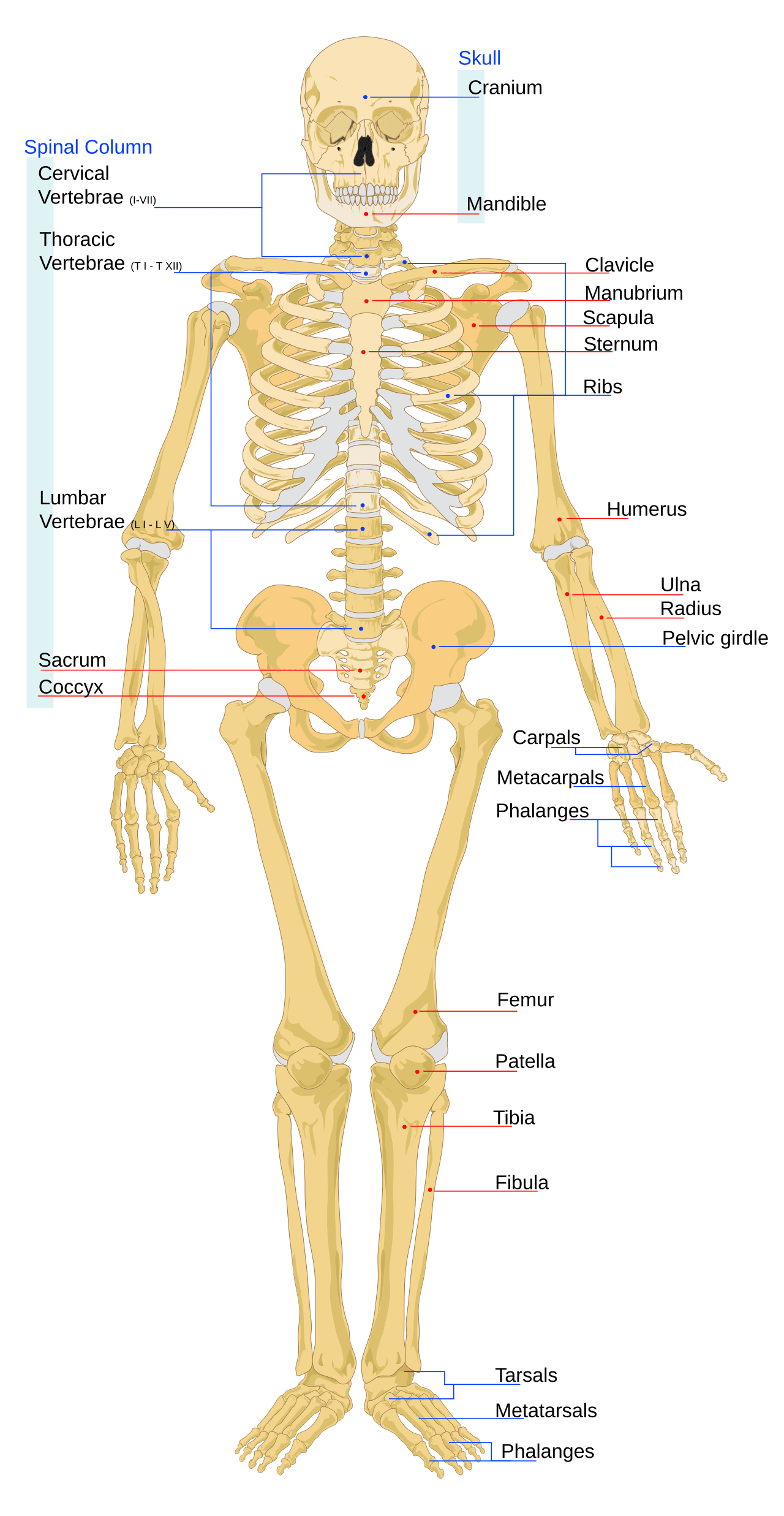
Anatomical diagram of the human skeleton showing major bones and joints
Image credit: LadyofHats Mariana Ruiz Villarreal · Public domain · Rendered as PNG

Many bone and joint pains start mildly, and some improve with rest, pain relief, or compresses at home. However, not every condition is suitable for home treatment. Certain symptoms may signal a problem that needs early medical assessment before it gets worse.
Knowing when home care is enough and when to see an orthopedic doctor is therefore important.
When may home care be suitable?
Home care may be appropriate for a short time in mild cases, such as:
A mild muscle strain after a clear physical effort.
Mild pain after exercise.
A minor injury that is already improving quickly.
A small bruise without severe swelling or difficulty moving.
In these situations, rest, ice, suitable pain relief, and reducing strenuous movement may help relieve symptoms.
When should you see an orthopedic doctor?
Seek assessment if:
Pain continues for several days without clear improvement.
Pain is severe or gets worse over time.
There is noticeable swelling of the joint or injured limb.
Movement becomes restricted.
Walking or using the affected limb becomes difficult.
The injury followed a fall or a forceful twist.
Pain is accompanied by numbness or weakness.
Symptoms affect sleep, work, or everyday activities.
Which situations need earlier assessment?
Waiting too long is not recommended in situations such as:
Knee pain with locking or instability.
Shoulder pain with difficulty raising the arm.
Back pain extending into a leg or accompanied by numbness.
Ankle pain with an inability to put weight on the foot.
A visible deformity after an injury.
Severe swelling after an accident or fall.
Why is home care not always enough?
Some problems may seem minor at first but be related to:
A severe sprain.
Tendon inflammation.
Nerve compression.
Advanced osteoarthritis.
An injury that needs immobilization or specialist treatment.
Relying on home care for too long may delay the correct diagnosis and make later treatment more difficult.
When can I continue home care, and when should I stop waiting?
You can continue home care briefly when pain is mild and gradually improving. If there is no clear improvement, symptoms begin to affect movement, or the problem is getting worse, medical assessment is the better next step.
What does an orthopedic assessment involve?
The doctor usually:
Reviews the history of the injury or pain.
Examines movement, swelling, and the site of pain.
Assesses muscle strength and joint stability.
Requests imaging or other tests when needed.
Decides whether conservative care or more specialized treatment is appropriate.
Summary
Home care is suitable only for some mild conditions. Persistent or severe pain, or pain affecting movement and everyday life, is a clear reason to see an orthopedic doctor. Early assessment helps identify the actual cause and choose appropriate treatment before the problem progresses.
Read also: Ankle sprain: grades and treatment
Medical references
Related articles
Related treatment services
Medical note
Need a medical assessment?
This content is educational and does not replace a medical examination. If pain continues or affects movement, book an appointment to identify the cause and suitable treatment plan.