
Joints
Osteoarthritis: Symptoms, Causes and Best Treatments
- Osteoarthritis
- Knee osteoarthritis
- Hip osteoarthritis
- Knee pain
- Joint pain
- Joint stiffness
- Knee replacement
- Physiotherapy
- Orthopedic surgeon Kuwait
Written by: Dr. Osama Samir Al-Droubi · Specialist in orthopedic surgery, fractures, sports medicine and joint reconstruction
Published by: Dr. Osama Samir Al-Droubi's clinic · Salmiya, Kuwait
Last updated:
A simple guide to osteoarthritis: early signs, causes and risk factors, how it is diagnosed, and the best treatments from exercise and weight loss to injections and joint replacement, based on current medical guidelines.
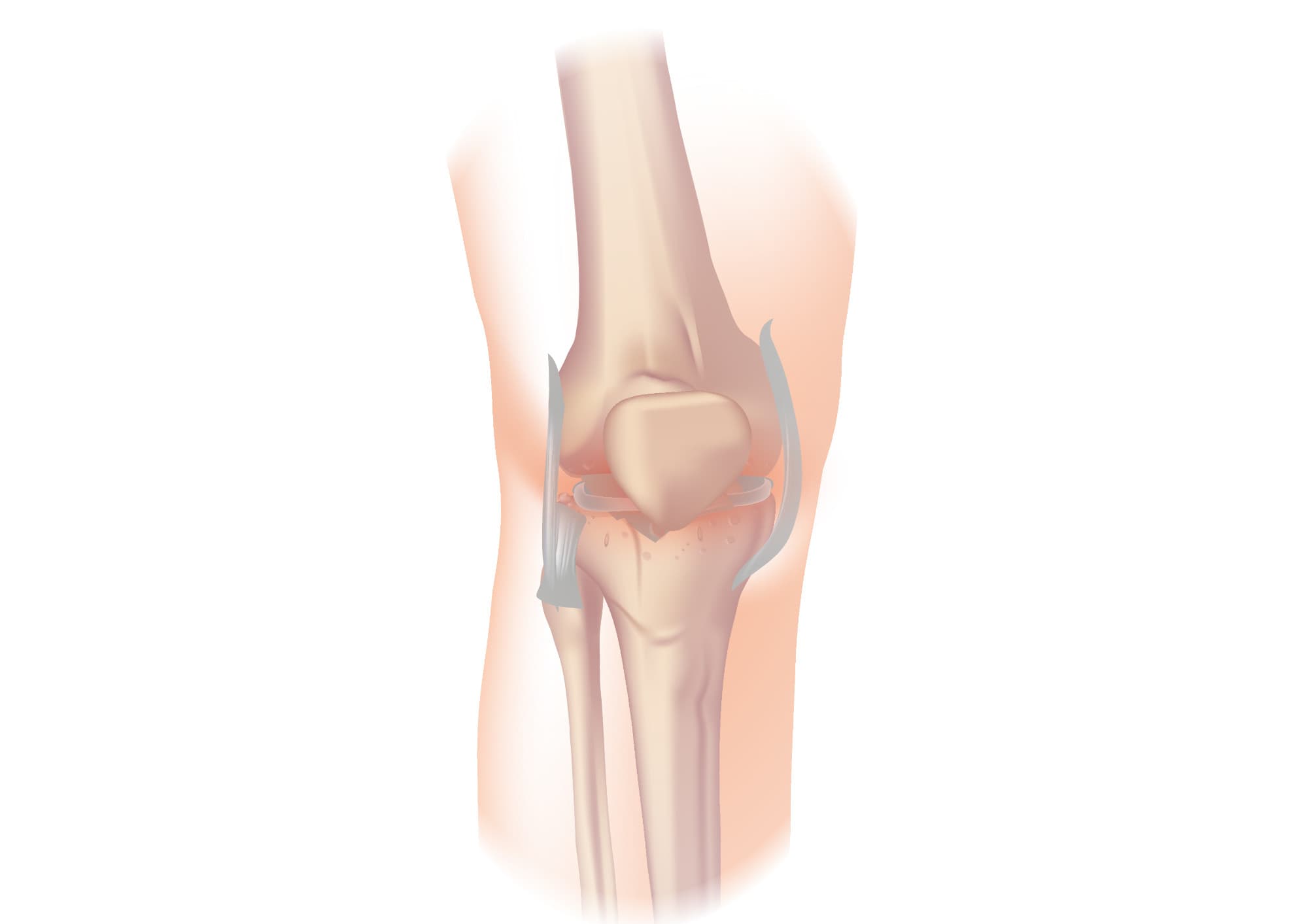
Illustration of osteoarthritis in the knee joint

Quick answer: Osteoarthritis is the most common type of arthritis. It happens when the smooth cartilage that cushions the ends of your bones slowly wears thin, so the joint becomes painful and stiff. It can't be reversed, but exercise, weight control and the right treatment help most people stay active.
Osteoarthritis in simple words
Think of a healthy joint like a well-oiled hinge. Smooth cartilage lets the bones glide. In osteoarthritis, this layer becomes rough and thin. The bone underneath thickens and forms bone spurs, and the joint lining may become inflamed. In advanced cases, bone may rub directly on bone.
Osteoarthritis is very common. Researchers estimate that about 595 million people around the world were living with it in 2020.
The joints most often affected are:
Knees – the most common, making walking and stairs harder.
Hips – pain is often felt in the groin or thigh, sometimes down to the knee.
Hands – especially the finger joints and the base of the thumb.
Spine – the neck and lower back.
Signs your joints may have osteoarthritis
Symptoms start slowly and include:
Pain that gets worse with activity and better with rest.
Stiffness in the morning or after sitting, usually lasting less than 30 minutes.
A grinding, crackling or clicking feeling when you move the joint.
Not being able to bend or straighten the joint fully.
Mild swelling around the joint.
Hard bony lumps on the finger joints.
Good to know: If morning stiffness lasts more than an hour, or several joints on both sides of the body are swollen, red and warm, it may be a different condition such as rheumatoid arthritis.
Why does osteoarthritis happen?
Several factors usually add up:
Age: it becomes much more common after 45–50.
Extra body weight: every extra kilogram adds about 4 kilograms of pressure on your knees when you walk.
Old injuries: such as a torn ligament (ACL), a meniscus tear or a fracture into the joint.
Being female: women are affected more often, especially after menopause.
Genes and joint shape: for example bow legs or a hip that did not develop normally.
Repeated strain: jobs or sports with a lot of kneeling, squatting or heavy lifting.
Weak muscles: especially the thigh muscles that protect the knee.
How do doctors diagnose it?
Usually, your doctor diagnoses osteoarthritis from your symptoms and an examination. According to UK NICE guidelines, no scan is needed if you are 45 or older, have joint pain linked to activity, and have no morning stiffness or stiffness that lasts 30 minutes or less.
Tests may still be useful in some cases:
X-ray: shows narrowing of the joint space and bone spurs, and helps plan surgery.
MRI: if a ligament or meniscus injury, or another cause of pain, is suspected.
Blood tests or joint fluid tests: to rule out rheumatoid arthritis, gout or infection.
What treatments work best?
Treatment follows a step-by-step approach. International guidelines (ACR, OARSI and NICE) agree that everyone should start with non-surgical options.
Step 1: Exercise and physiotherapy
This is the foundation of treatment for everyone, at any age. Strengthening exercises, stretching and low-impact activity such as walking on flat ground, swimming or a stationary bike reduce pain and improve movement.
Step 2: Weight loss
If you are overweight, losing just 5–10% of your body weight can noticeably reduce knee pain and make daily activities easier.
Step 3: Medicines
Anti-inflammatory gels rubbed on the joint are a good first choice for knee and hand pain.
Anti-inflammatory tablets can help, at the lowest dose for the shortest time after a medical check.
Step 4: Joint injections
A steroid (cortisone) injection can calm a painful flare for a few weeks. Hyaluronic acid ("knee gel") and PRP injections have mixed scientific evidence. They may help some patients with mild to moderate osteoarthritis, together with exercise and weight control, and your doctor will decide if they suit you.
Step 5: Supports and aids
A knee brace, a walking stick held in the hand opposite the painful joint, or a thumb splint can take pressure off the joint.
Step 6: Surgery
Surgery is considered when severe pain limits daily life despite other treatments. The main options are total or partial knee or hip replacement, or osteotomy (realigning the bone) for younger patients with bow legs. Knee arthroscopy to clean damaged cartilage may be used only in selected cases, such as when the knee locks or catches, and is not a routine treatment for osteoarthritis.
When should you see an orthopedic doctor?
Joint pain that lasts more than a few weeks or wakes you at night.
Difficulty walking, climbing stairs or doing daily tasks.
Repeated swelling, redness or warmth in a joint.
A joint that looks bent or deformed.
Pain that does not improve with painkillers and exercise.
Simple ways to protect your joints
Keep a healthy weight.
Stay active with low-impact exercise, about 150 minutes a week.
Strengthen your thigh and hip muscles.
Get joint and ligament injuries treated early and properly.
Avoid long periods of kneeling or squatting and frequent heavy lifting.
The bottom line
Osteoarthritis is common, but it can be managed. Early diagnosis, regular exercise and weight control can delay the need for surgery for many years. If you live in Kuwait and have knee or hip pain, you can book an appointment with Dr. Osama Droubi at his Salmiya clinic for a personal treatment plan.
Read also: Walking after knee replacement
References
NICE. Osteoarthritis in over 16s: diagnosis and management (NG226). 2022. https://www.nice.org.uk/guidance/ng226
Kolasinski SL, et al. 2019 American College of Rheumatology/Arthritis Foundation Guideline for the Management of Osteoarthritis of the Hand, Hip, and Knee. Arthritis Care Res. 2020;72(2):149-162.
Bannuru RR, et al. OARSI guidelines for the non-surgical management of knee, hip, and polyarticular osteoarthritis. Osteoarthritis Cartilage. 2019;27(11):1578-1589.
GBD 2021 Osteoarthritis Collaborators. Global, regional, and national burden of osteoarthritis, 1990–2020 and projections to 2050. Lancet Rheumatol. 2023;5(9):e508-e522.
Messier SP, et al. Weight loss reduces knee-joint loads in overweight and obese older adults with knee osteoarthritis. Arthritis Rheum. 2005;52(7):2026-2032.
World Health Organization. Osteoarthritis – Fact sheet. https://www.who.int/news-room/fact-sheets/detail/osteoarthritis
American Academy of Orthopaedic Surgeons (OrthoInfo). Arthritis of the Knee. https://orthoinfo.aaos.org/en/diseases--conditions/arthritis-of-the-knee/
Medically reviewed by: Dr. Osama Droubi, Specialist Orthopedic Surgeon
Review date: October 26, 2026
Frequently asked questions
Can osteoarthritis be cured?
There is no treatment yet that regrows worn cartilage. However, exercise, weight loss and physiotherapy clearly reduce pain and improve movement for most people, and can delay the need for surgery for years.
Is walking good for knee osteoarthritis?
Yes. Regular walking at a comfortable pace is one of the recommended exercises for knee osteoarthritis. It strengthens the muscles, keeps the joint flexible and helps nourish the cartilage through the joint fluid. Start gradually and avoid very long walks during a pain flare.
Do hyaluronic acid (knee gel) injections work?
The evidence is mixed, and some international guidelines do not recommend them routinely. They may help some patients with mild to moderate osteoarthritis when combined with exercise and weight control. Your orthopedic doctor will decide if they suit you.
When do I need a knee replacement?
A knee replacement is considered when pain is severe and limits walking, sleep and daily activities despite several months of non-surgical treatment, and X-rays show advanced osteoarthritis.
What is the difference between osteoarthritis and rheumatoid arthritis?
Osteoarthritis is caused by wear of the joint and usually causes short morning stiffness of less than 30 minutes. Rheumatoid arthritis is an autoimmune disease that causes swelling in several joints on both sides of the body and morning stiffness that often lasts more than an hour.
Medical references
Related articles
Related treatment services
Medical note
Need a medical assessment?
This content is educational and does not replace a medical examination. If pain continues or affects movement, book an appointment to identify the cause and suitable treatment plan.