
Knee
How Long Does Walking Take After Knee Replacement?
- Knee replacement
- Walking after surgery
- Knee rehabilitation
- Physiotherapy
Written by: Dr. Osama Samir Al-Droubi · Specialist in orthopedic surgery, fractures, sports medicine and joint reconstruction
Published by: Dr. Osama Samir Al-Droubi's clinic · Salmiya, Kuwait
Last updated:
Learn when walking may begin after knee replacement, factors affecting recovery, the role of physiotherapy, and postoperative signs that need assessment.
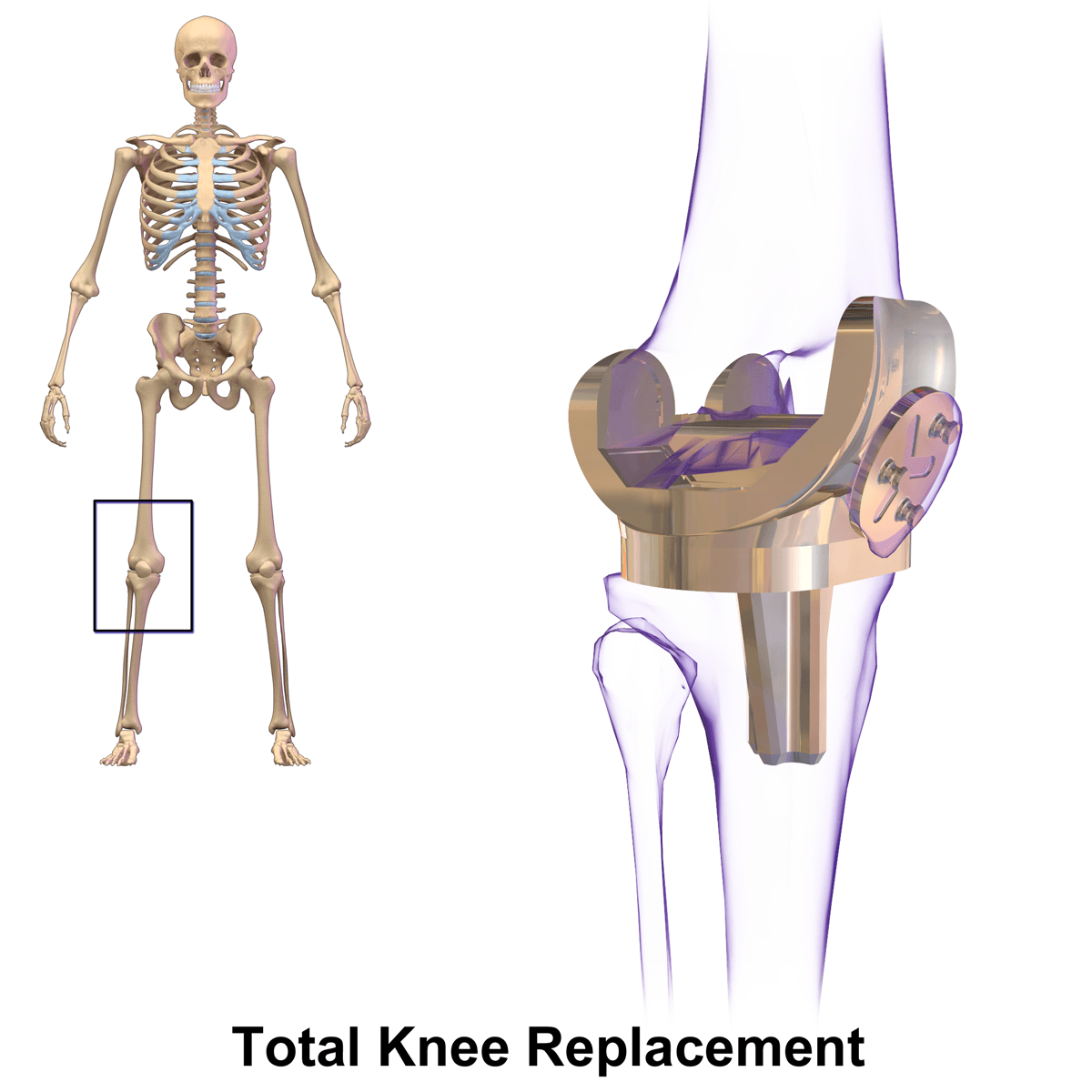
Illustration of the knee joint and components of a knee replacement
Image credit: BruceBlaus · CC BY-SA 4.0

One of the most common questions before knee replacement is: when will I be able to walk? The answer varies from person to person. In most cases, walking starts early after surgery under the supervision of the medical and physiotherapy teams.
The aim of surgery is not only to relieve pain, but also to restore movement and improve walking and everyday activities.
When does walking begin after knee replacement?
In many cases, walking begins soon after surgery, usually with help from a physiotherapist and an appropriate aid such as a walking frame or crutch.
Early walking helps:
Improve circulation.
Reduce complications associated with limited movement.
Activate the muscles.
Rebuild confidence in using the new knee.
Is walking normal immediately after surgery?
No. Walking starts gradually and is usually not fully normal during the first few days. Time is needed to improve strength, flexibility, and balance and to become used to the new joint.
Early on, it is common to experience:
Slower movement.
A need for a walking aid.
Some pain or tightness.
Getting tired more quickly than usual.
What affects the time needed to return to walking?
Recovery time depends on factors including:
The patient's age.
Body weight.
Muscle strength before surgery.
The severity of knee osteoarthritis before surgery.
Chronic conditions such as diabetes or heart disease.
Participation in physiotherapy.
The type of surgery and the joint's overall condition.
When does walking improve more noticeably?
Walking usually improves gradually during the first weeks and continues to improve with time and regular rehabilitation. Some patients notice rapid progress, while others need longer to walk more comfortably and steadily.
Progress is assessed not only by the ability to stand and walk, but also by:
Reduced pain.
An increased range of movement.
Better balance.
The ability to carry out everyday activities.
Is physiotherapy important after surgery?
Yes. Physiotherapy is one of the main factors supporting a successful operation and a good return to walking. It helps:
Strengthen the muscles around the knee.
Improve knee bending and straightening.
Restore balance.
Improve walking technique.
Reduce stiffness.
Neglecting physiotherapy may slow improvement or reduce the benefit of surgery.
How can I support my walking recovery?
Recovery can be supported by:
Following the prescribed physiotherapy exercises.
Using a walking aid as instructed by the doctor.
Avoiding overloading the knee early on.
Elevating the leg when needed to reduce swelling.
Attending regular follow-up appointments.
Following medication and postoperative instructions.
When should symptoms after surgery cause concern?
See a doctor if unusual symptoms appear, such as:
Severe pain that gets worse instead of improving.
Severe or increasing swelling.
Marked redness or heat.
Sudden difficulty moving.
Signs of infection or wound problems.
Summary
Walking after knee replacement often begins early, but comfortable, steady walking takes time and regular rehabilitation. Following physiotherapy and medical instructions improves the chances of a good recovery and a better return to daily activities.
Read also: When do I need knee arthroscopy?, Joint injections explained: cortisone, gel and PRP
Medical references
Related articles
Related treatment services
Medical note
Need a medical assessment?
This content is educational and does not replace a medical examination. If pain continues or affects movement, book an appointment to identify the cause and suitable treatment plan.