
Bone health
Osteoporosis: Symptoms, Causes, and Prevention
- Osteoporosis
- Bone density
- Fracture prevention
- Bone health
Written by: Dr. Osama Samir Al-Droubi · Specialist in orthopedic surgery, fractures, sports medicine and joint reconstruction
Published by: Dr. Osama Samir Al-Droubi's clinic · Salmiya, Kuwait
Last updated:
Learn about osteoporosis risk factors, symptoms, bone density testing, prevention, and treatment options to help reduce fracture risk.
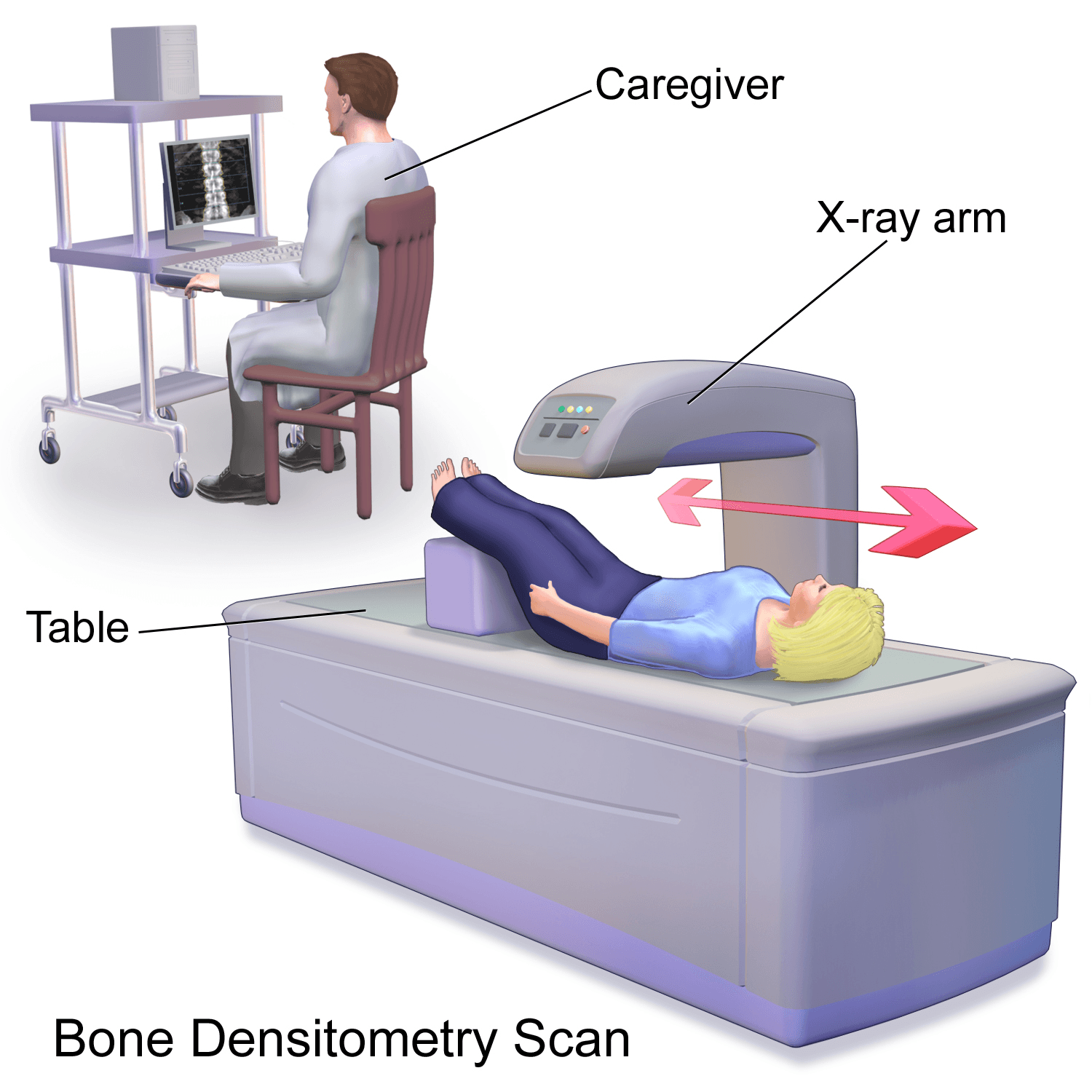
Illustration of a bone densitometry scan
Image credit: BruceBlaus / Blausen.com staff (2014) · CC BY 3.0 · Medical gallery of Blausen Medical 2014

What is osteoporosis?
Osteoporosis is a common condition that reduces bone density and makes bones more likely to fracture, especially with increasing age. It may develop silently without clear early symptoms, becoming apparent later through fractures, back pain, or reduced bone strength.
Who is more likely to develop osteoporosis?
Risk is higher among women after menopause, older adults, people with a family history, those with calcium or vitamin D deficiency, people who are physically inactive, smokers, and those taking certain medicines for a long time, such as corticosteroids.
What contributes to osteoporosis?
Contributing factors include aging, hormonal changes, calcium and vitamin D deficiency, limited sunlight exposure, lack of physical activity, smoking, and certain chronic conditions or medications.
What are the symptoms of osteoporosis?
Early stages may have no obvious symptoms. As the condition progresses, possible signs include back pain, loss of height over time, a curved back, fractures occurring more easily, and generally reduced bone strength.
When should osteoporosis testing be considered?
Discuss testing with a doctor if you are in a higher-risk group, particularly women after menopause, older adults, people who have had fractures without a major injury, those with a strong family history, and people using corticosteroids long term.
How is osteoporosis diagnosed?
Diagnosis usually involves assessment of risk factors and symptoms, bone density testing, calcium and vitamin D tests when needed, and evaluation for fractures or changes in the spine or hips.
How can osteoporosis be prevented and treated?
Prevention and treatment may include adequate calcium and vitamin D, moderate sunlight exposure, regular exercise, muscle strengthening and balance training, stopping smoking, treating vitamin deficiencies or associated causes, and osteoporosis medicines in cases selected by the doctor.
Summary
Osteoporosis is common, but it can be detected early and managed effectively. Recognizing risk factors early improves the opportunities for prevention and reducing fractures and complications.
Read also: Osteoarthritis: symptoms, causes and best treatments, Developmental hip dysplasia
Medical references
Related articles
Related treatment services
Medical note
Need a medical assessment?
This content is educational and does not replace a medical examination. If pain continues or affects movement, book an appointment to identify the cause and suitable treatment plan.