
Foot and ankle
Heel Spur: Causes, Symptoms and Best Treatments
- Heel spur
- Calcaneal spur
- Heel pain
- Plantar fasciitis
- Foot pain
- Bone spur
- Heel spur treatment
- Stretching exercises
- Shockwave therapy
- Orthopedic surgeon Kuwait
Published by: Dr. Osama Samir Al-Droubi's clinic · Salmiya, Kuwait
Last updated
A simple guide to heel spurs: what they are, how they relate to plantar fasciitis, common symptoms and causes, how they are diagnosed, and the best treatments, from stretching and good shoes to injections, shockwave therapy, and surgery.
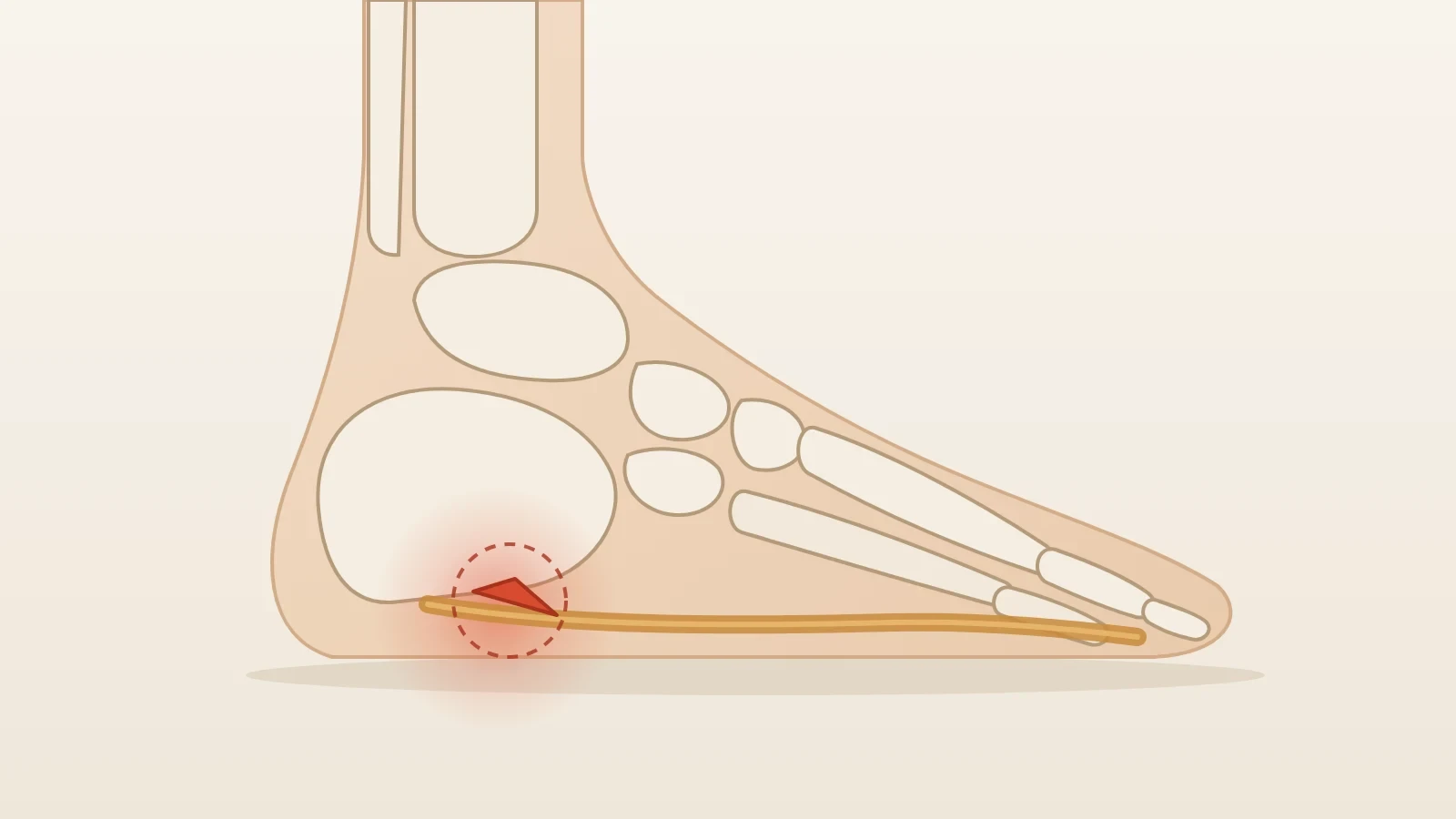
Illustration of a heel spur: a small bony bump under the heel bone where the plantar fascia attaches, with the painful area under the heel
What is a heel spur, and does it cause heel pain?
Quick answer: A heel spur is a small bony bump under the heel bone, where a thick band of tissue called the plantar fascia attaches. The spur itself rarely causes pain: most people who have one feel nothing, and heel pain usually comes from plantar fasciitis. More than 9 out of 10 people get better within 10 months with simple treatments that do not need surgery.
You get out of bed, take your first step, and feel a sharp pain in your heel. An X-ray shows a "heel spur," and it is easy to think the spur is the problem. In most cases, it is not. Here is what a heel spur really is, and what actually helps.
What is a heel spur?
Your plantar fascia is a strong band of tissue that runs along the bottom of your foot, from your heel to your toes. It supports your arch every time you walk.
When this band pulls on the heel bone for a long time, the bone can slowly grow a small spur at that spot. About 15 in 100 people have a heel spur, and many only find out when they have an X-ray for something else.
Does a heel spur cause heel pain?
Usually not. Most people with heel spurs have no pain at all. The pain usually comes from plantar fasciitis, which is irritation of the plantar fascia where it attaches to the heel. That is why doctors treat heel spur pain the same way they treat plantar fasciitis.
What does it feel like?
Pain under your heel, often sharp or stabbing
Worst with your first steps in the morning, or after sitting for a long time
Eases after a few minutes of walking
Gets worse after exercise or long periods of standing
Hurts when you press on the bottom of your heel
Who is more likely to get it?
People aged about 40 to 60
People who carry extra weight
People who stand or walk on hard floors for many hours
Runners, and anyone who suddenly increases their activity
People with flat feet or very high arches
People with tight calf muscles
People who wear unsupportive shoes or walk barefoot on hard floors
Is all heel pain caused by a heel spur?
No. Other problems can also cause heel pain. An irritated Achilles tendon hurts at the back of the heel. A squeezed nerve near the ankle, called tarsal tunnel syndrome, can cause tingling or burning under the foot. A small stress fracture in the heel bone is another cause. That is why heel pain that does not go away should be checked.
How does the doctor check it?
Your doctor will ask about your pain and press on different parts of your foot. An X-ray can show the spur and rule out other problems, such as a fracture or arthritis. Other scans are rarely needed.
How is it treated?
The good news: most people get better without surgery. Treatment usually goes step by step.
1. Rest your heel
Cut back on running and long hours of standing. Swimming or cycling can keep you active while your heel settles.
2. Stretch every day
Stretch your calf by leaning against a wall, and gently pull your toes back before you get out of bed. Regular stretching is one of the most helpful things you can do.
3. Wear the right shoes
Choose shoes with a cushioned heel and good arch support. Heel pads or insoles can help. Avoid walking barefoot and wearing flip-flops. A night splint may help if mornings are the worst.
4. Use ice and pain relief
Put ice on the bottom of your foot for 20 minutes, a few times a day. Anti-inflammatory medicines can help for a short time, but ask your doctor first.
5. Injections and shockwave therapy
If pain lasts for months, your doctor may suggest a steroid (cortisone) injection. It can ease pain, but it is used carefully because it can weaken the plantar fascia. PRP injections and shockwave therapy are other options, but results vary from person to person.
6. Surgery
Surgery is rarely needed. It is usually only considered if pain continues after about 12 months of proper non-surgical treatment. The surgeon usually releases part of the plantar fascia or lengthens a tight calf muscle. The spur itself is usually left alone, because it is rarely the cause of the pain.
How does Dr. Osama Droubi treat heel spur pain?
Dr. Osama believes good treatment starts with the right diagnosis, not just an X-ray. His approach goes step by step:
Listen and examine: he asks when your pain started and what makes it worse, then examines your foot carefully to find where the pain comes from.
Only the tests you need: such as an X-ray when it helps the decision.
Simple treatment first: anti-inflammatory medicine if it suits you, home exercises, ice, and shoe inserts.
Physiotherapy if needed: if you have not improved enough after 1 to 2 weeks, he refers you to physical therapy.
Injection as the next step: if physical therapy does not help, an injection is considered.
This way, you get the simplest treatment that works, without procedures you do not need.
When should you see a doctor?
See an orthopedic doctor if:
Your pain has not improved after 2 weeks of home care
The pain is severe or stops you from doing daily activities
You feel tingling or numbness in your foot
You have diabetes and foot pain
The pain started after a fall or injury, or your heel is swollen, red, or warm
How can you prevent it?
Keep a healthy weight
Wear supportive shoes, and replace worn-out sports shoes
Increase exercise slowly and stretch your calves often
Avoid long hours of standing or walking barefoot on hard floors
The bottom line
A heel spur sounds worrying, but it is rarely the real cause of heel pain. Most people get better with stretching, good shoes, and a little patience. If heel pain is slowing you down and you live in Kuwait, you can book an appointment at Dr. Osama Droubi's clinic in Salmiya for a proper check and a treatment plan that fits you.
Read also: Ankle sprain, When should I see an orthopedic doctor?
References
American Academy of Orthopaedic Surgeons (AAOS) – OrthoInfo. Plantar Fasciitis and Bone Spurs. https://orthoinfo.aaos.org/en/diseases--conditions/plantar-fasciitis-and-bone-spurs/
Cleveland Clinic. Heel Spurs. https://my.clevelandclinic.org/health/diseases/21965-heel-spurs
NHS. Plantar fasciitis. https://www.nhs.uk/conditions/plantar-fasciitis/
Medically reviewed by: Dr. Osama Droubi, Specialist Orthopedic Surgeon
Review date: November 10, 2026
Frequently asked questions
Will my heel spur go away?
The bony spur usually stays once it forms, but that does not mean the pain will stay. Most people's pain gets better with treatment, even though the spur still shows on an X-ray.
How long does heel spur pain last?
Many people feel better within weeks to months. More than 9 out of 10 improve within 10 months of starting simple treatments such as stretching and supportive shoes.
Do I need surgery for a heel spur?
Rarely. Surgery is only considered if pain lasts about 12 months despite proper non-surgical treatment, and the spur itself is usually not removed.
Is a heel spur the same as plantar fasciitis?
No. A heel spur is a bony bump seen on an X-ray. Plantar fasciitis is irritation of the band of tissue under your foot, and it is the usual cause of the pain. You can have one without the other.
What are the best shoes for heel spur pain?
Shoes with a cushioned heel and good arch support, such as supportive trainers. Heel pads or insoles can help too. Avoid going barefoot and wearing flip-flops.
Can I keep exercising with a heel spur?
Yes, but switch to low-impact activities such as swimming or cycling until the pain settles, and keep doing your calf and foot stretches every day.
Medical note
Need a medical assessment?
This content is educational and does not replace a medical examination. If pain continues or affects movement, book an appointment to identify the cause and suitable treatment plan.