
Leg
Why Do My Legs Hurt When I Run? Causes and What Helps
- leg pain
- leg pain when running
- shin pain running
- shin splints
- stress fracture
- compartment syndrome
- calf strain
- Achilles tendinitis
- running injuries
- orthopedic doctor in Kuwait
Published by: Dr. Osama Samir Al-Droubi's clinic · Salmiya, Kuwait
Medically reviewed by Dr. Osama Al Droubi on
Last updated
A simple guide to leg pain when running, from shin splints and stress fractures to compartment syndrome and Achilles problems, plus warning signs and how to get back to running.
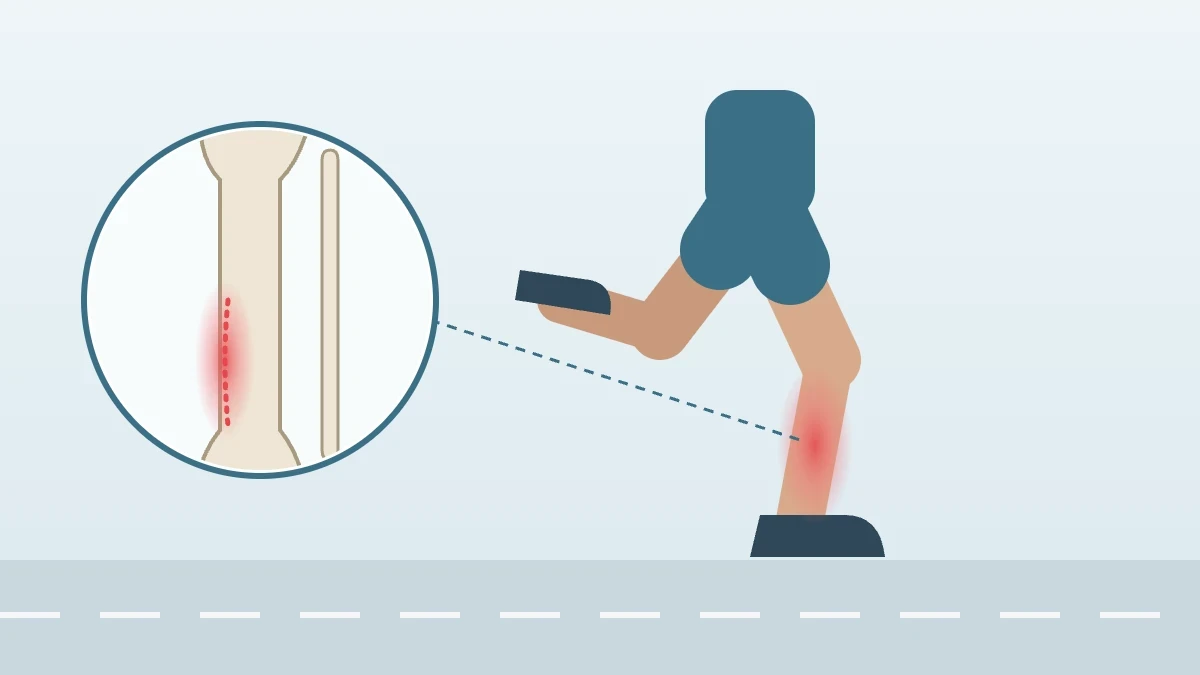
Illustration of leg pain when running: a runner's leg with pain along the inner edge of the shinbone, and a close-up of the lower leg bones showing the shin splints area
Quick answer: The most common cause of leg pain when running is shin splints, a pain along the inner edge of the shinbone. Other causes include stress fractures, a muscle pressure problem called exertional compartment syndrome, and calf or Achilles tendon injuries. Most get better without surgery by changing your training and slowly building back up. Pain in one spot on the bone, or pain at rest, needs a doctor's check.
Many people start running, or suddenly run more, and then notice their legs hurting every time they train. Where it hurts and when it starts are the best clues to the cause.
Why does running hurt the lower legs?
Every running step sends a jolt through your shinbone and calf muscles. If you add miles faster than your bones and muscles can adapt, small overload injuries start to build up.
What are the common causes?
1. Shin splints
This is the most common cause. You feel pain along the inner edge of the shinbone, during or after running, sometimes with mild swelling. It's more likely if you increase training too fast, run in worn-out shoes, run on hard surfaces, or have flat feet. If ignored, it can turn into a stress fracture.
2. Stress fracture
This is a tiny crack in the bone from repeated impact, and the shinbone is a common spot in runners. The pain is in one exact spot, gets worse the longer you run, and may later hurt even when walking or resting. Weak bones raise the risk, so read about osteoporosis too.
3. Exertional compartment syndrome
Your leg muscles sit inside tight "sleeves." In this condition, the sleeve doesn't stretch as the muscle swells during exercise, so pressure builds up. The tell-tale sign: aching, tightness or numbness that starts after the same distance or time every run, and usually eases within about 15 minutes of stopping. It often affects both legs.
4. Calf strain and Achilles tendon pain
A calf strain causes sudden pain in the back of the leg while running. Achilles tendon problems cause pain and stiffness low in the back of the leg, just above the heel, often after running farther or harder than usual.
5. Causes from outside the leg
Poor blood flow: calf pain when walking or running that goes away after a few minutes of rest. It's more likely in smokers, people with diabetes, and older adults.
A pinched nerve in the back: such as sciatica, where pain travels from the lower back down the leg.
Where and when does it hurt? A simple guide
Along the inner shin: usually shin splints.
One small spot that hurts to press: possible stress fracture.
Tightness or numbness after a set distance, gone with rest: compartment syndrome.
Back of the leg or above the heel: calf or Achilles.
When is leg pain a warning sign?
See a doctor soon if you have:
Pain at rest or at night, or trouble walking.
Sharp pain in one spot on the bone.
Sudden pain at the back of the leg with a "pop," like being kicked.
Numbness or weakness in the foot that doesn't go away after stopping.
A swollen, red, warm calf, or a cold, pale foot.
How do doctors find the cause?
Your doctor will ask about your training, shoes and running surface, and press along your leg to find the sore spot. X-rays may look normal in an early stress fracture, so an MRI is used if one is suspected. Compartment syndrome may need a pressure test inside the muscle.
How does Dr. Osama Droubi treat leg pain from running?
Dr. Osama Droubi finds the real cause first, then treats step by step:
Listen and examine: your training, shoes and surface, then your leg, foot arch and walking pattern.
Only the tests you need: an X-ray or MRI only if a stress fracture or another cause is suspected.
Simple first steps: training changes, pain relief if suitable for you, ice, home exercises, and shoe inserts when helpful.
Physical therapy: if there is little improvement after 1–2 weeks, with a plan to get you back to running.
Surgery as a last resort: only in a few cases, like compartment syndrome that doesn't improve, or certain high-risk stress fractures.
What helps leg pain from running?
1. Rest smart
Cut back or pause running for a while. Swim or cycle instead to keep your fitness without the pounding.
2. Ice and pain relief
Ice after activity eases pain and swelling. Pain relievers can help for a short time; ask your doctor first.
3. Strengthen and stretch
Stronger calf, ankle, hip and core muscles, plus calf stretches, help your legs handle running.
4. The right shoes
Replace worn running shoes, and use shoe inserts if you have flat feet or very high arches.
5. Return slowly
Once the pain is gone, start with short runs on flat, even ground and add a little each week. A stress fracture needs a longer break, and sometimes a walking boot or crutches.
How can I prevent it?
Build up distance and speed slowly.
Mix running with other exercise and take rest days.
Run on softer, even surfaces when you can.
Eat well to keep your bones strong.
The bottom line
Leg pain when running is common, and most of the time it's shin splints from doing too much too soon. It usually gets better with smarter training and a slow return. Pain in one spot on the bone, or pain at rest, should be checked for a stress fracture. If you live in Kuwait and your leg pain keeps coming back, book an appointment with Dr. Osama Droubi at his clinic in Salmiya.
Read also: Flat Feet, Sciatica, When Should I See an Orthopedic Doctor?
References
American Academy of Orthopaedic Surgeons (AAOS) – OrthoInfo. Shin Splints. https://orthoinfo.aaos.org/en/diseases--conditions/shin-splints/
StatPearls. Medial Tibial Stress Syndrome. NCBI Bookshelf. https://pubmed.ncbi.nlm.nih.gov/30860714/
Warden SJ, Davis IS, Fredericson M. Management and prevention of bone stress injuries in long-distance runners. J Orthop Sports Phys Ther. 2014;44(10):749–765. https://doi.org/10.2519/jospt.2014.5334
Mayo Clinic. Chronic exertional compartment syndrome. https://www.mayoclinic.org/diseases-conditions/chronic-exertional-compartment-syndrome/symptoms-causes/syc-20350830
American Academy of Orthopaedic Surgeons (AAOS) – OrthoInfo. Achilles Tendinitis. https://orthoinfo.aaos.org/en/diseases--conditions/achilles-tendinitis/
NHS. Peripheral arterial disease (PAD). https://www.nhs.uk/conditions/peripheral-arterial-disease-pad/
Medically reviewed by: Dr. Osama Droubi, Specialist Orthopedic Surgeon
Review date: November 24, 2026
Frequently asked questions
How can I tell shin splints from a stress fracture?
Shin splints hurt along a longer stretch of the inner shin. A stress fracture hurts in one exact spot when you press on it, and may hurt even when walking or resting.
Can I keep running with shin pain?
It's better to cut back or pause and swim or cycle instead, then return slowly once the pain is gone. Running through pain can turn a minor problem into a stress fracture.
How long do shin splints take to heal?
Most people improve within a few weeks of rest and training changes. A stress fracture usually needs a longer break from running.
Will an X-ray show a stress fracture?
Not always. X-rays can look normal in the first weeks, so an MRI is used if a stress fracture is suspected.
Can new running shoes help?
Yes. Worn-out shoes raise the risk. Replacing them, and using shoe inserts if you have flat feet, can take pressure off your legs.
When is leg pain from running serious?
See a doctor soon if the pain happens at rest or at night, sits in one spot on the bone, comes with numbness or weakness in the foot, or your calf is swollen, red and warm.
Medical note
Need a medical assessment?
This content is educational and does not replace a medical examination. If pain continues or affects movement, book an appointment to identify the cause and suitable treatment plan.